A competition proposal for the United Kingdom’s presence at Shanghai World Expo 2010. The brief called for a pavilion on a 6,000 sq m site overlooking the Huangpu River, capable of receiving 40,000 visitors a day.
/
Reference
01
The brief demanded a building with a life after the Expo.
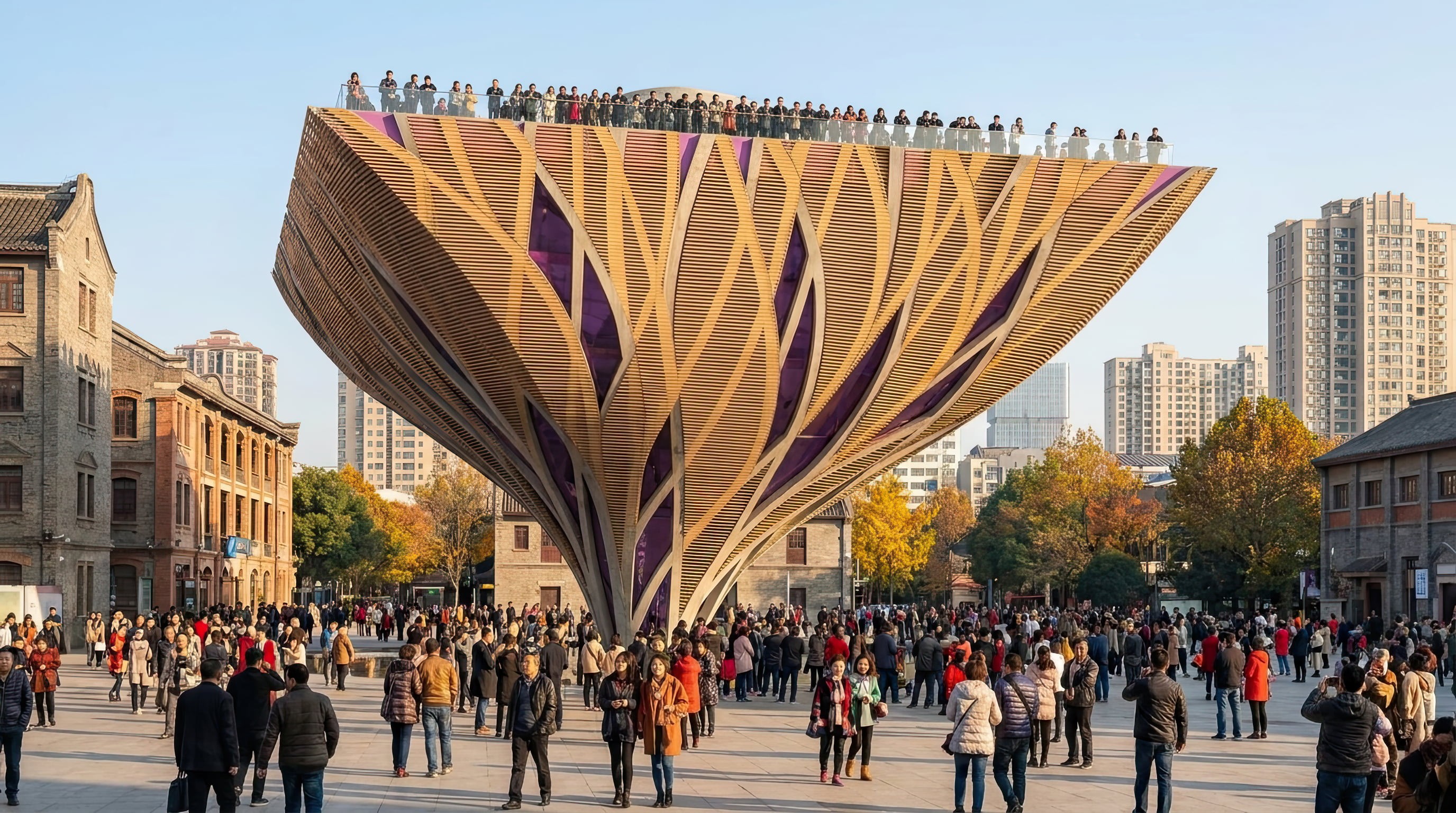
The Expo theme was Better City, Better Life. The brief asked for a pavilion that addressed low-carbon economies and sustainable urban development. Growth became the reference: biological, civic and urban. The tree provided the architectural logic because it combines branching structure, shade, public gathering and the possibility of life beyond the original site.


/
System
02
Each tree is a structure. Together they form a pavilion.
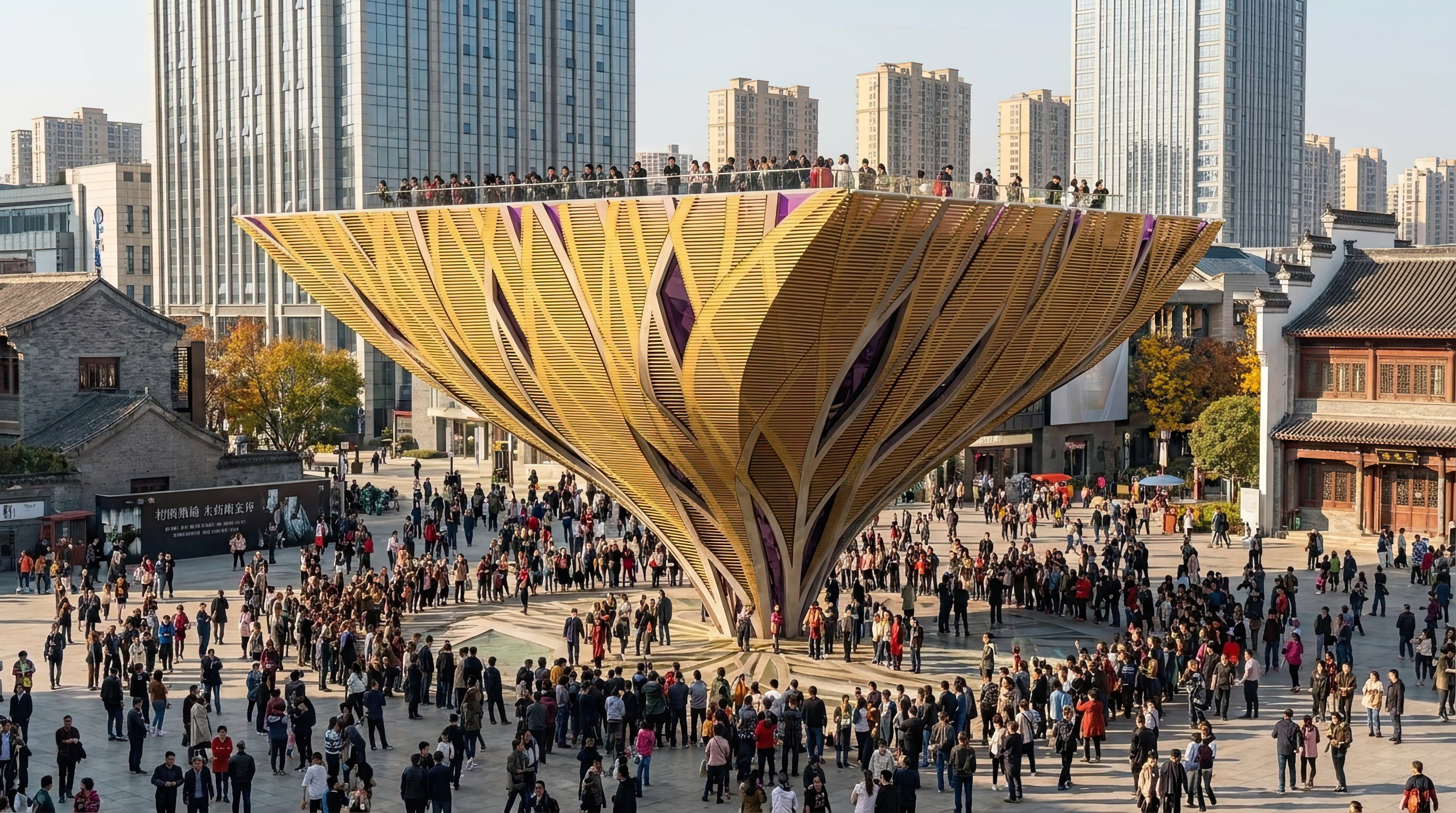
The proposal is organised as a series of interconnected tree forms. Branching columns rise from the ground and spread into a continuous canopy, creating covered public space below and accessible terraces above. Each tree carries a distinct thematic programme. The open ground plane supports high visitor numbers, while the canopy gives the site a single spatial identity. Demountability is built into the system: after the Expo, each tree could be reassembled elsewhere in China as a standalone civic structure.




/
Resolution
03
The pavilion continues after the exhibition closes.
In Shanghai, the trees operate as one pavilion. After Shanghai, they become a distributed network. The same structural logic and public function operate at both scales. The form does not change. The context does.
Project designed by Steven Chilton as project director at Marks Barfield Architects.


Latest Projects.
A curated selection of projects that reflect our commitment to simplicity and purposeful design.
The work
The work