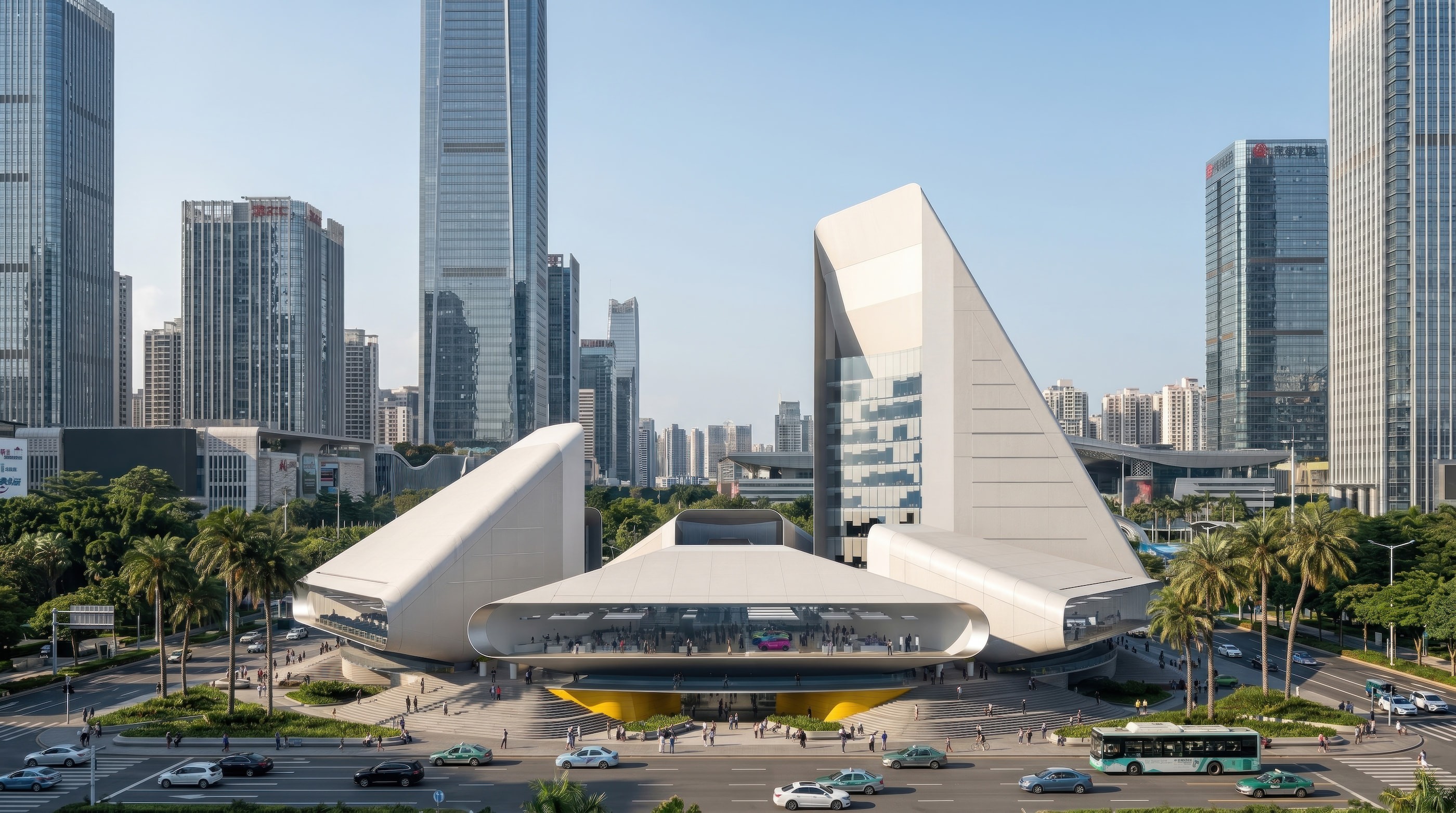
A 135-metre observation wheel on the South Bank of the Thames. The project gives London a new public vantage point from Jubilee Gardens, the same ground used for the Festival of Britain in 1951.
/
Reference
01
The site carries a history of public optimism through design.
The Festival of Britain transformed a bomb-damaged stretch of the South Bank into a public statement about the future. The Skylon, Dome of Discovery and Royal Festival Hall all expressed that belief in architecture, engineering and civic experience. The London Eye continued that tradition at the turn of a new century. It used the observation wheel typology to give the public a new way to see the city.



/
System
02
Structure, movement and experience are inseparable.
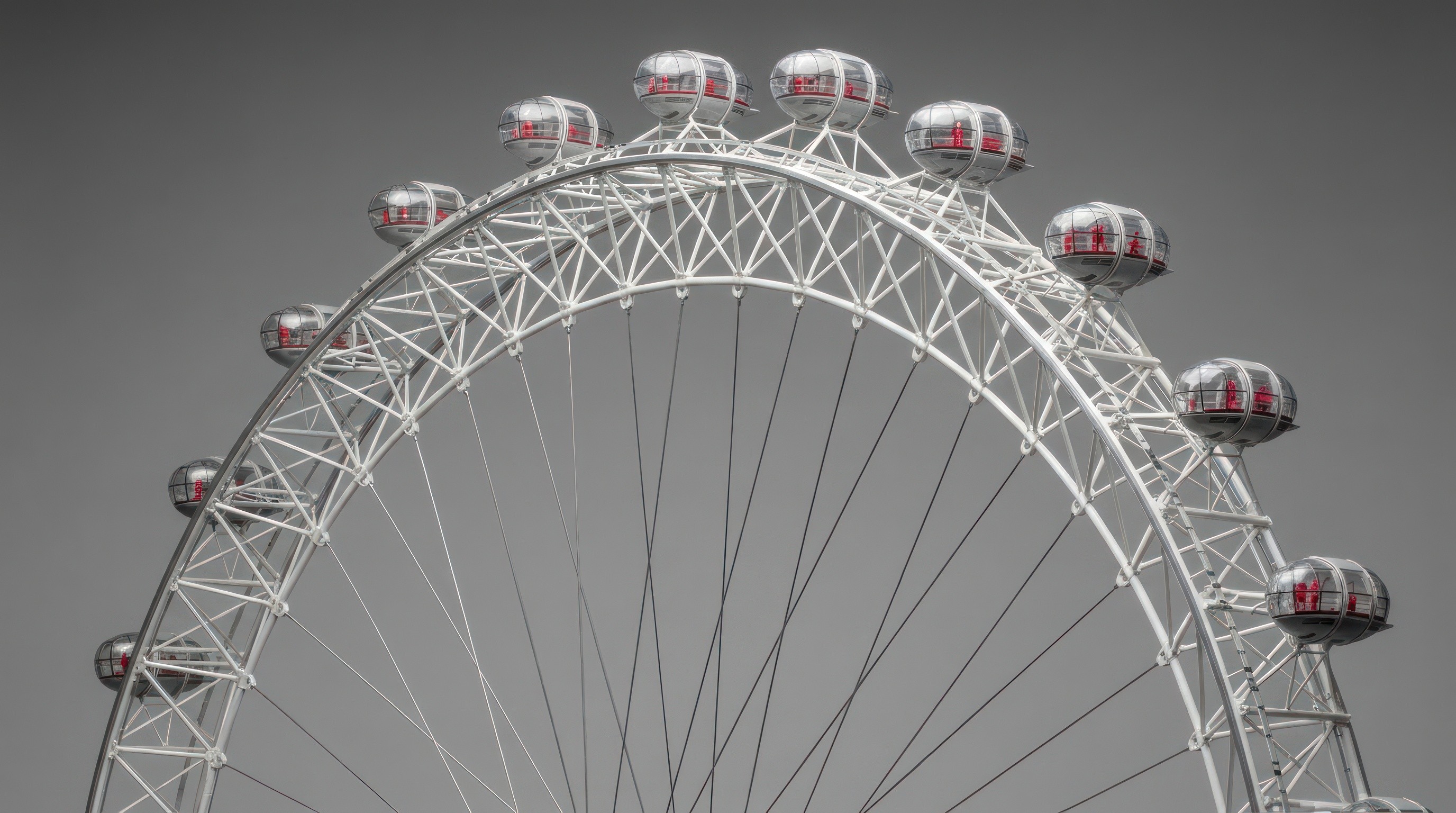
The wheel rotates on a spindle supported by an A-frame structure anchored to the riverbank. Backstay cables transfer the load into the ground, allowing the wheel to cantilever over the river. Thirty-two fully glazed capsules are mounted on external bearings so they remain level through a continuous 30-minute rotation. The boarding platform, pier, canopy and landscape kiosks complete the public interface at ground level.


/
Resolution
03
A civic structure built from a single public act: seeing London anew.
From across the river, the wheel reads as one clear object: rim, capsules, spindle, A-frame and cable structure held in balance. Its purpose is equally clear. It lifts the public above the city and returns them to the same ground. The London Eye opened in March 2000 and has become part of the South Bank’s civic identity.
Steven Chilton worked on the design and delivery of The London Eye and associated structures as project architect at Marks Barfield Architects.


Latest Projects.
A curated selection of projects that reflect our commitment to simplicity and purposeful design.
The work
The work